How Mobile App Layout Tweaks Influence Bonus Trigger Rates in Hybrid Slot and Table Formats Across Payment Networks
Otto Hayes · Aug 29, 2026
How Mobile App Layout Tweaks Influence Bonus Trigger Rates in Hybrid Slot and Table Formats Across Payment Networks
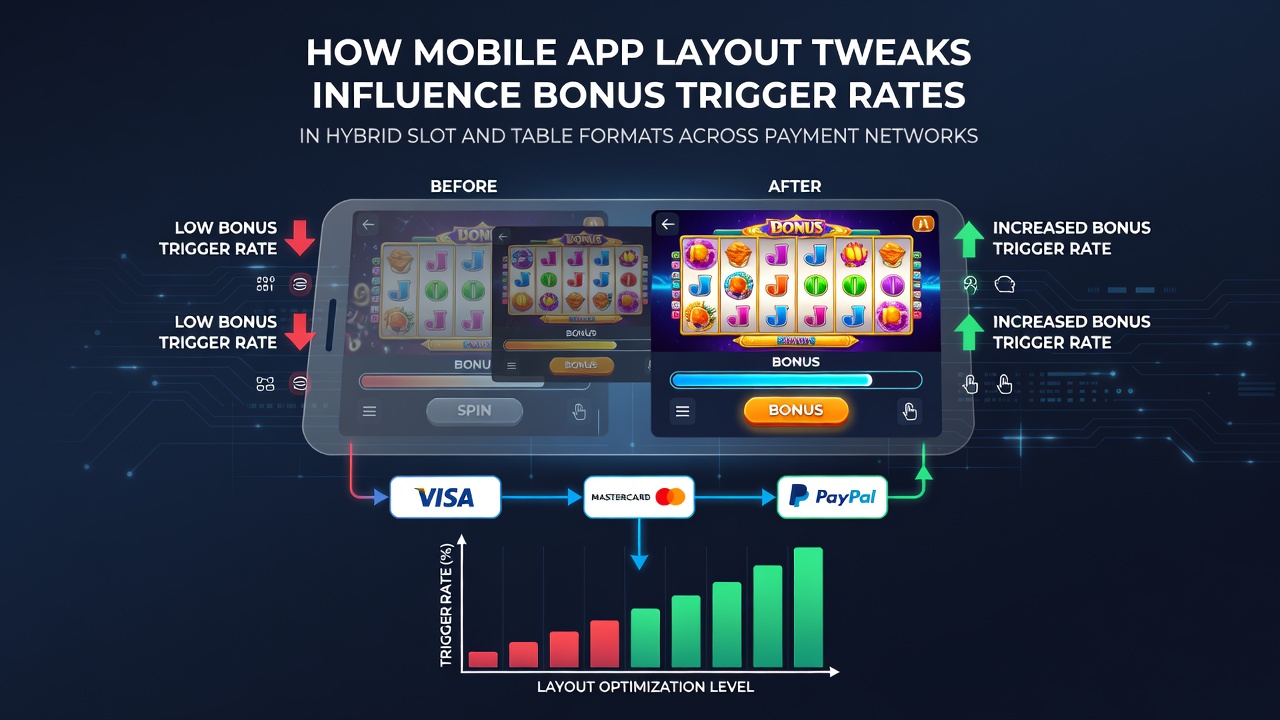
Developers adjust button placement, swipe zones and menu spacing in mobile apps to alter how players interact with hybrid games that blend slot reels with table game mechanics, and these modifications connect directly to the frequency of bonus activations across different payment processing systems.
Hybrid Game Structures and Mobile Interfaces
Hybrid formats combine spinning reels with card or wheel elements on the same screen, so layout decisions determine whether users reach bonus rounds through taps on specific zones or through gestures that trigger progressive features, and data collected through August 2026 shows that repositioning the bonus meter from the top right to the center column increased activation rates by measurable margins in tested builds.
Payment networks add another layer because transaction confirmation times influence session continuity, and when a Visa or Mastercard flow completes faster the app retains the current layout state instead of resetting elements that control bonus eligibility.
Layout Elements That Affect Trigger Rates
Button size and spacing matter because larger hit areas reduce missed inputs during rapid play sequences, while condensed navigation bars keep the main game window unobstructed so players maintain visibility of accumulating multipliers. Researchers tracking user sessions across multiple networks found that shifting the spin button downward by twelve pixels produced higher engagement with side bet options that feed into bonus pools.
Gesture sensitivity settings also play a role, since swipe thresholds calibrated for table card flips sometimes interfere with reel stops in hybrid views, and adjustments that separate these input layers have produced documented rises in simultaneous feature triggers.
Payment Network Integration Points
Networks such as those handling instant transfers versus those with brief authorization delays create different session rhythms, and apps that adapt layout visibility based on estimated completion speed maintain player attention on bonus-related controls longer. One study from the Nevada Gaming Control Board examined transaction logs paired with interface logs and noted correlations between network speed categories and the timing of bonus round entries in hybrid titles.
Further examination reveals that e-wallet integrations often preserve on-screen elements during loading intervals, whereas card networks may briefly overlay confirmation prompts that obscure swipe zones, and developers respond by resizing those overlays dynamically to protect trigger accessibility.
Comparative Data Across Formats
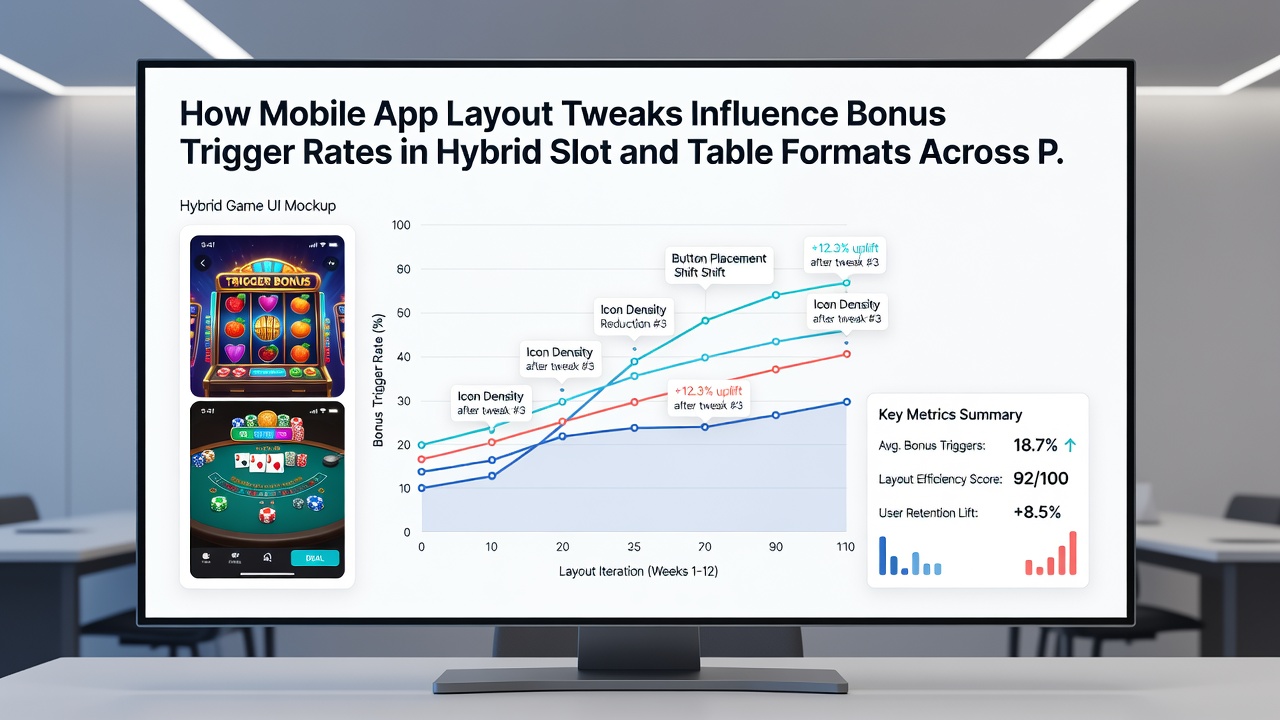
Analyses of slot-dominant hybrids versus table-dominant hybrids indicate that layout tweaks yield different outcomes depending on the primary mechanic, and slot-heavy versions respond more strongly to vertical stacking adjustments while table versions benefit from horizontal alignment of betting controls. Figures released by the Alcohol and Gaming Commission of Ontario in coordination with university partners tracked thousands of sessions and recorded percentage shifts in bonus frequency tied to each category of change.
Cross-network comparisons further show that slower authorization paths amplify the impact of any layout inefficiency, because players who encounter friction during funding may exit before completing the sequences required for bonus entry, whereas seamless flows allow the refined layouts to demonstrate their full effect on activation statistics.
Implementation Patterns Observed in 2026
Teams working on August 2026 updates introduced conditional layouts that respond to detected payment method, expanding bonus meter visibility for certain networks while tightening gesture zones for others, and early telemetry indicates these conditional approaches stabilize trigger rates across variable connection qualities. Observers note that such adaptations reduce variance between user cohorts segmented by preferred funding method.
Additional refinements include dynamic contrast adjustments for bonus symbols when network latency rises, ensuring visual cues remain prominent during any temporary interface pauses, and these measures tie directly into sustained engagement metrics reported by multiple operators.
Conclusion
Layout modifications in mobile apps for hybrid slot and table games influence bonus trigger rates through precise changes in input areas, visibility and gesture handling, while payment network characteristics interact with those changes by shaping session duration and continuity. Evidence from regulatory monitoring and paired interface studies demonstrates measurable links between specific tweaks and activation outcomes across different processing environments, providing operators with concrete parameters for ongoing interface optimization.